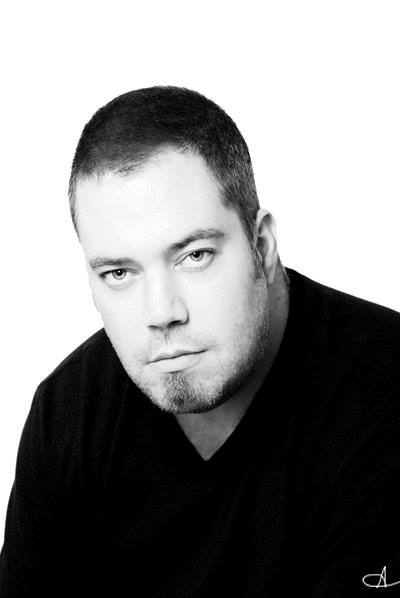
About Kevin Pearce

Kevin Pearce

After graduating high school in 1995 with a significant amount of embarrassingly cliched emotional baggage, Kevin “Subliminal White Trash” Pearce made his way to Toronto in a perfectly understandable attempt to outrun his past. After encountering many similarly desperate and stubbornly eccentric people, Kevin found his way into the acting and spoken word scenes. With an amazing and almost inhuman effort, Kevin somehow negotiated through his self destructive tendencies on his way to finding some kind of second rate enlightenment in his strange little world of reckless, impulsive creativity. After spending three years in Toronto, Kevin decided to return to the suburbs in order to preserve his diminishing supply of mental health. Sometimes he even thinks it was the right decision.

A New Bio of Kevin By His Brother

Kevin C. Pearce came out of Burlington with nothing but a notebook, a head full of voices, and the bad habit of noticing too much.

Kevin had a bio he wrote that ended when he returned from Toronto to Burlington to deal with his mental illness in his early twenties. As his younger brother, I wanted to finish his story of what he lived for, the community he built with his creative spirit and what gave him meaning and happiness in his life.

Even in the struggles of mental illness, there are many beautiful moments and experiences that can make life magical. I hope this story and his writings can help other people who share the struggle of fighting the darkness and addiction that consumes so many lives in this society.

Burlington wore its mask. It was the kind of place people called safe, comfortable and respectable. Lake Ontario shining out front, shopping malls filled with polite smiles and quiet streets with perfectly trimmed lawns. But Kevin was a rebel on the outside looking in and from that perspective he saw through the superficiality. He saw the silence that hummed beneath the neat surfaces. He felt the emptiness that hid in all that order.

His writing was born out of that contradiction. A perfect looking suburb that pretended to have no problems but carried them all in secret. He gave voice to the loneliness that haunted people as they scrolled on their flickering screens. He noticed the darkness of addictions that people buried deep inside. He wrote about the despair that sat behind kitchen tables where the bills piled up higher than the hopes. He was willing to look at the side of Burlington that no one wanted to admit existed.

Kevin was not only writing about one city. He was writing about Canada too. A country that prides itself on politeness, order, beauty, and civility. He knew there was another side. A darker one that pulsed underneath the polished postcard views. Long winters that freeze you from the inside out. Quiet and safe streets where people vanish into themselves. The slow ache of a culture that hides its suffering under small talk, consumerism and weather reports.

For Kevin, the darkness was not an abstract idea. It lived inside him. Mental illness pressed on him like a shadow he could not fully shake. He carried it into his writing, where he laid it bare for anyone willing to listen. The voices, the emptiness, the disappointments and the weight of nights that never ended. He wrote them down with a blunt honesty that was both confession and rebellion.

And yet he also knew how to keep a flame alive. Kevin was a pyro who loved tending fire more than anything, and every week he gathered friends around a community fire ritual each Friday. It was called the Pit and it attracted hundreds of people over the years to a secluded wooded area wedged between factories and the commuter train line by Fairview Street and Harvester. He did the Pit for over 2 decades, rarely ever missing a night until his final year when his mental illness began to consume him.

The Pit was a weekly communion with friends and acquaintances from across Burlington and Hamilton, most of whom struggled with mental illness and lived on disability. Around that fire, stories were traded, spoken word was performed, silences were shared, and for a while the darkness seemed less heavy. The Pit was the ritual that gave his life meaning, Kevin’s way of building light in a world where he so often got consumed by the darkness.

Kevin also came alive on stage at local spoken word nights. The notebook became a weapon and the microphone a confessional for his poetic flow. He spoke the words like someone tearing open his chest, raw and unfiltered, but he did more than spill the darkness. He could twist it, bend it into laughter, and make the room crack open. His dark humour, sharp and crooked, carried a truth that audiences often already felt in their gut. He could take the bleakest thought and flip it on its head until people were doubled over, laughing at the very thing that once scared them.

As an MC for spoken word nights, Kevin was the pulse of the room and the community. He welcomed misfits, dreamers, and outsiders with a grin that said you belong here. He had the timing of a comic and the heart of a poet, stitching together each performer’s set with jokes, commentary, and offhand observations that were as biting as they were funny. His social commentary never spared the comfortable lies people told themselves, but it always made them laugh at the absurdity of it all.

Kevin’s legacy is not polished. It is not comfortable. It is a record of one man’s struggle to put into words the darkness that so many pretend is not there. He showed Burlington for what it was beneath the veneer. He showed Canada for what it carried under the surface. And in doing so, he gave the rest of us permission to admit that the emptiness exists, and that sometimes speaking it aloud, or gathering around a fire with friends, is the only way to survive.

I want to end with a quote from one of Kevin’s favourite movies American Beauty. It’s the main character Lester Burnham’s final monologue, which expresses a sense of gratitude and wonder at the world’s beauty despite the surrounding chaos and his own demise:

“Sometimes, there’s so much beauty in the world – I feel like I can’t take it, like my heart is just going to cave in. And then I remember to relax, and stop trying to hold on to it. And then it flows through me like rain. And I can’t feel anything but gratitude for every single moment of my stupid little life. You have no idea what I’m talking about, I’m sure. But don’t worry. You will someday.”